
 English
When 3D Printing Meets Clothing Fabrics: An Innovative Exploration from Flexible Structures to Weara
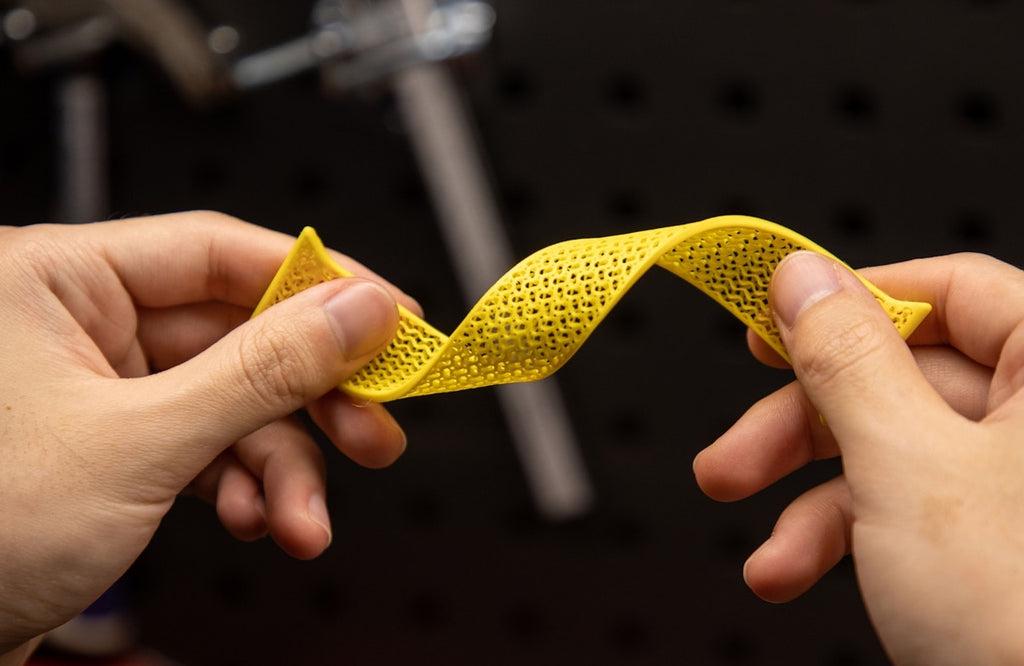
Traditional clothing design relies on spinning, weaving, cutting, and sewing to transform fibers into fabrics with form, texture, and function. However, with the development of 3D printing technology, designers have begun to explore alternative ways to create clothing structures: through digital modeling, plastic materials are deposited layer by layer to form meshes, chain structures, openwork textures, and even flexible surfaces that can be bent and move.
From futuristic clothing on fashion shows to decorative fabrics that conform to the body's curves, and then to footwear, accessories, and wearable art, 3D printing is expanding the ways in which clothing design can be expressed.
It doesn't necessarily have to completely replace traditional textile fabrics. Instead, when 3D printed structures are combined with fabrics, yarns, leather, or other flexible materials, designers can create entirely new works that are both visually appealing and functional.
1. How does 3D printing create fabric-like structures?
The biggest difference between 3D printed clothing and traditional clothing lies in how the structure is formed. Traditional fabrics are usually formed through yarn interlacing, knitting loops, or nonwoven processes, while 3D printing can directly transform the geometric structure in a digital model into a physical object.
1. Mesh and openwork structure: creating a lightweight and breathable fabric.
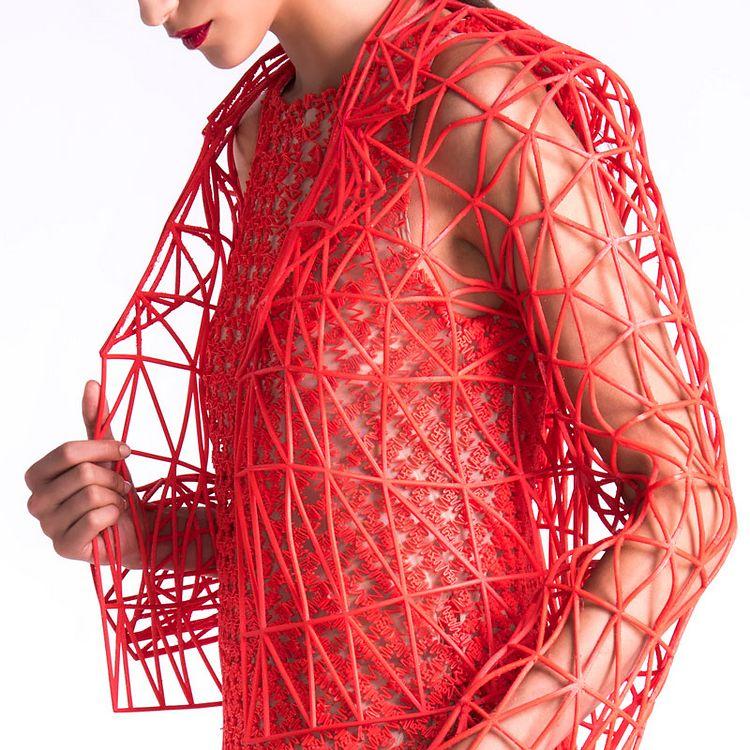
Mesh is one of the easiest 3D printed fabric structures to learn. Designers can create sheet-like structures with a certain degree of flexibility by repeating rhombuses, hexagons, wavy lines, or other geometric units.
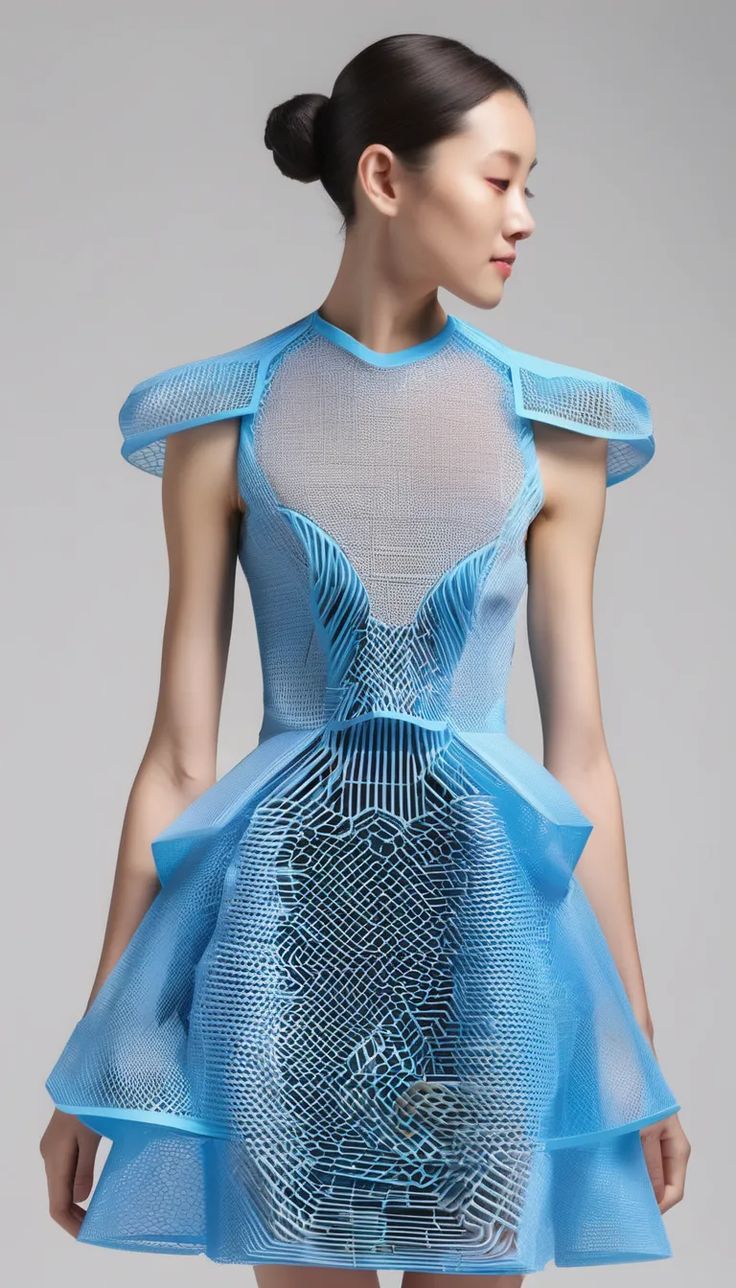
This type of design is suitable for use in garment shoulder embellishments, chest panels, cuffs, skirts, headdresses, and stage costumes. By adjusting the size, connection method, and overall thickness of the mesh units, different visual effects ranging from delicate and refined to exaggerated and three-dimensional can be created.
Compared to solid printed sheets, perforated structures can reduce material usage and overall weight. However, the flexibility of the mesh depends not only on the size of the holes, but also on the connection points, unit shape, material hardness, and printing direction.
2. Chain and interlocking structure: allows the printed parts to move freely.
If you want the printed structure to be able to bend like chainmail or fabric, you can try chain, ring, or interlocking unit designs.
These structures achieve mobility through geometric connections between independent units, rather than relying on significant stretching of the material itself. During the design phase, reasonable gaps need to be reserved between adjacent units to prevent them from sticking together after printing.
Applicable directions include:
Stage costumes with a metallic chainmail visual effect.
Flexible wrist, shoulder, and waist decorations.
Articulated 3D printed collars, brooches, and clothing accessories.
Partial decorative panels made using traditional fabrics.
It should be noted that the interlocking structure is quite sensitive to model accuracy and printing gaps. It is recommended to first create a small-sized sample to confirm that each unit can move smoothly before scaling up to a complete garment part.
3. Wave and pleat structure: Simulates the dynamic feel of the fabric.
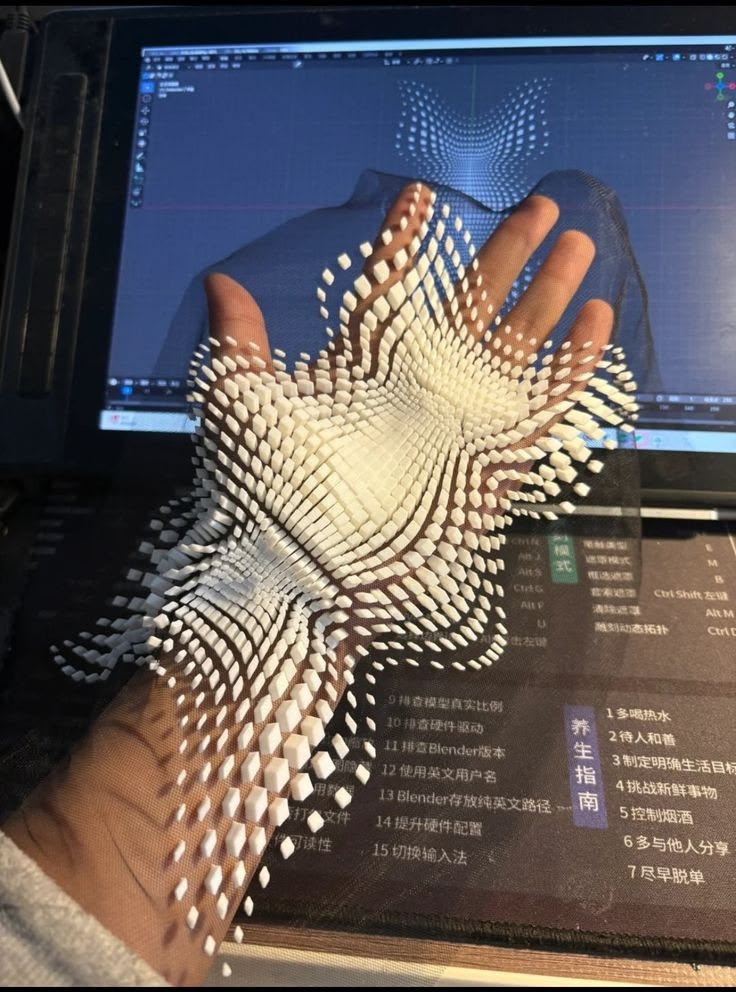
The pleats, drape, and waves in traditional clothing often rely on the weight, softness, and cutting method of the fabric. 3D printing, on the other hand, can directly shape these visual features through geometric forms.
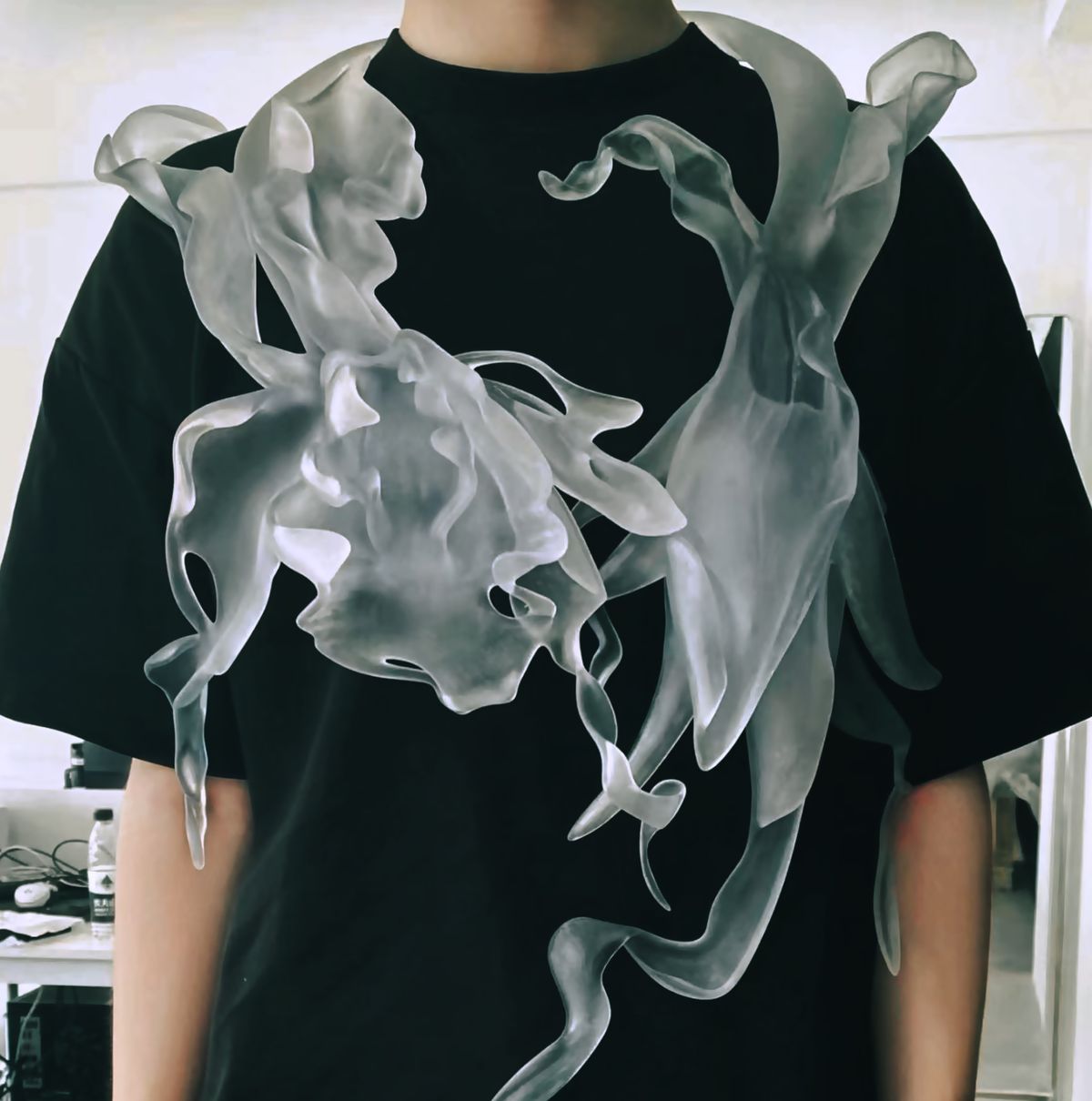
For example, by designing continuous waves, zigzag folds, or gradient surfaces in a digital model, and then printing them using a thin-walled structure, decorative panels with three-dimensional layers can be formed.
These structures are particularly suitable for fashion concept design, art installations, photographic styling, and partial embellishment of clothing. However, it should be noted that printed fixed pleats are not the same as the natural drape of traditional fabric. If you want the work to change with body movement, you still need to combine it with flexible materials or movable structural designs.
II. Three 3D Printing Fabric Production Methods Worth Trying
Method 1: FDM Flexible Mesh Printing
<Image can be added here: TPU flexible diamond-shaped grid printed sheet, demonstrating its flexibility by bending it by hand>
FDM is one of the easiest ways to create flexible 3D printed structures. The printer extrudes molten material and stacks it layer by layer to directly form meshes, corrugated sheets, and other flexible geometries.
Operating Tips:
Start with TPU.TPU has good flexibility, making it suitable for making structures that need to be bent, move repeatedly, or conform to curved surfaces.
Prioritize testing thin-walled and open-mesh structures. There's no need to print a thick, solid structure from the start. You can design a small diamond grid first and observe the changes in flexibility by varying the line width, wall thickness, and connection points.
Control the printing speed. Flexible filaments typically require a more stable feeding process. The specific feeding speed should be determined by referring to the material specifications and printer requirements to avoid unstable extrusion caused by excessively fast feeding.
Inspect the structural connections. If the connection point is too thin, it may break easily; if it is too thick, it will reduce the bending ability. A balance needs to be found through sample pieces.
Prioritize verifying wearable comfort. If the structure needs to come into contact with the skin, check the edges, sharp corners, and joints to avoid scratches.
This method is suitable for making flexible decorative pieces, bendable garment components, and wearable accessories with a certain degree of elasticity.
Method 2: Combine printing with traditional fabrics
<Image can be added here: a detail of a garment where 3D-printed decorative panels are spliced with fabric, demonstrating how the printed structure integrates into the textile.>
Combining 3D printing with traditional fabrics is a way to get closer to actual clothing design.
Designers can first print out the grid, pattern, or three-dimensional decoration, and then install it onto base materials such as cotton, knitted fabric, or mesh through sewing, fabric interlayering, mechanical fastening, or other proven connection methods.
For example, geometric prints can be added to soft black mesh to give garments both a lightweight textile feel and a three-dimensional digital texture; or partial prints can be added to cuffs, collars, and bag surfaces to create distinctive design details.
Operating Tips:
Pre-design the stitching holes or connection structure to reduce the difficulty of later processing.
The printed parts are broken down into smaller modules to increase freedom of movement when wearing them.
Test the bond strength between the fabric and the printed part before the actual production.
Choose a weight and stiffness that match the base fabric to avoid excessive decoration that could deform the fabric.
If hot pressing or bonding is required, the compatibility between the fabric, consumables, and adhesive should be confirmed first.
This approach does not require the entire garment to be 3D printed, making it more suitable for integrating digital manufacturing into existing garment production and design processes.
Method 3: Interlocking Unit and Chainmail Printing
<Image available here: Flexible printed sheet composed of interlocking rings or geometric units, with a magnified view of the movable connection structure>
If you want to create more futuristic clothing, you can try designing interlocking structures using CAD modeling. Each unit can move independently and be connected into a whole structure through specific geometric relationships.
Unlike methods that rely solely on TPU stretching, this approach primarily achieves mobility through the structure itself. Therefore, the material can be relatively rigid, but the design must ensure sufficient space for movement between the individual units.
Operating Tips:
Print a small number of cells first to test their range of motion.
Set reasonable gaps between adjacent structures to avoid merging after printing.
Inspect the difficulty of removing suspended sections, bridging areas, and supports.
Try to avoid sharp edges, especially those close to the skin.
The durability of the structure is tested through bending, torsion, and repeated activities.
Interlocking structures are suitable for conceptual fashion, stage costumes, clothing accessories, and wearable art, but the design complexity is relatively high. It is recommended to try this after mastering basic grid printing.
III. How do different 3D printing consumables affect the performance of fabrics?
The final effect of 3D printed fabric depends not only on the model structure, but also on the hardness, toughness, surface texture, and processing method of the filament. When selecting materials, the design goals should be clearly defined first: whether to pursue softness and mobility, or to emphasize decorative effects, form stability, or special visual expression.
TPU: The preferred choice for flexible structures
TPU is a material worth prioritizing when creating flexible 3D printed structures. Its elasticity and bending resistance make it suitable for creating flexible meshes, movable decorative pieces, footwear components, wristbands, and accessories that conform to the body's curves.
ANTINSKY TPU series can be considered as a material selection option for flexible structure design. Specific models should be selected based on target hardness, elasticity, feeding system, and printer compatibility.
It's important to note that TPU is not the same as natural fabric. Its breathability, moisture absorption, and skin-friendly feel differ from traditional textile materials, making it more suitable for use in partial garment structures, decorations, and functional accessories, rather than directly replacing large areas of close-fitting fabric without proper verification.
PLA: Suitable for decorative structures with distinctive shapes
PLA is well-suited for creating garment embellishments with clear forms and rich details, such as geometric brooches, three-dimensional flowers, shoulder embellishments, neckline decorations, and conceptual fashion accessories.
The ANTINSKY PLA series allows you to explore different surface styles. Among them, PLA Matte is suitable for creating a low-reflection, soft visual effect; PLA Marble can bring a stone-like texture to decorative pieces; and PLA Luminous can be used for creative accessories that require special lighting effects.
These materials are better suited for components that emphasize form and visual appeal. If the design requires repeated bending or conforming to the body, materials should not be selected solely based on appearance; the structure's toughness and durability should be verified first.
PETG: Suitable for decorative parts with a certain degree of toughness.
PETG can be used as an alternative material for some clothing accessories and structural components, and is suitable for designs that require a certain degree of toughness, shape stability and a relatively defined outline.
The ANTINSKY PETG series can be used to create three-dimensional brooches, decorative fasteners, bag accessories, and partial structural panels. For designs that wish to achieve a semi-transparent, color gradient, or richer visual layers, you can also experiment with different colors and surface finishes depending on the specific product.
However, PETG is not a flexible fabric material. For components that require significant bending, continuous stretching, or close contact with the body, TPU should be evaluated first, or the structure should be redesigned.
IV. Starting with the First Sample Piece: Practical Tips for 3D Printing Fabrics
If you want to try 3D printing fabric yourself, you don't have to challenge yourself with a full garment right away. A properly sized mesh template is enough to help you understand the relationship between materials, structure, and printing parameters.
Step 1: Define your goals.First, decide whether the sample needs to be bent, stretched, interlocked, or simply used for surface decoration on clothing. Different objectives require different structural designs and material choices.
Step 2: Adjust one variable at a time.The size of the grid cells, wall thickness, connection point width, and cell spacing can be tested separately, and the impact of each adjustment on flexibility and strength can be recorded.
Step 3: Establish the correspondence between materials and structures.When flexibility is required, TPU should be tested first; PLA should be considered when emphasizing shape and detail; PETG can be tested when a certain degree of toughness and shape stability is required.
Step 4: Check the print quality.Observe for broken lines, stringing, insufficient interlayer bonding, or unit adhesion. For TPU, special attention should be paid to feeding stability and filament condition; for interlocking structures, attention should be paid to gaps and printing accuracy.
Step 5: Conduct actual usage tests.The sample pieces undergo repeated bending, connection strength checks, and edge inspections. If intended for clothing, weight, range of motion, comfort, cleaning methods, and long-term performance also need to be evaluated.
V. From conceptual fashion to everyday accessories, what else can 3D printing do?
The appeal of 3D printed fabrics lies not only in turning traditional cloth into plastic structures, but also in giving clothing designs more programmable forms and combinations.
In the realm of conceptual fashion, intricate geometric textures, interlocking structures, and gradient meshes can create visual effects that are difficult to achieve directly through traditional tailoring; in everyday accessories, printed parts can be used for collar ornaments, earrings, brooches, bag decorations, and partial structures of footwear; and in home and wearable art, flexible meshes can also be extended to lampshades, installation art, and interactive designs.
What's even more interesting is that 3D printed structures don't necessarily need to be formed in one piece. Through modular design, designers can freely combine units of different colors, textures, and structures, and even replace parts according to individual needs. This opens up new possibilities for small-batch customization, personalized design, and experimental creation.
Of course, when it comes to everyday wear, factors such as breathability, weight, abrasion resistance, skin contact safety, and cleaning and maintenance still need to be considered. For clothing worn close to the skin, children's products, or products worn for extended periods, a thorough assessment of materials and usage safety should be conducted.
Make materials a part of the design
From flexible TPU meshes to PLA 3D decorations and modular designs combined with traditional fabrics, 3D printing is bringing new ways of expression to clothing fabrics.
For designers, materials are no longer just consumables in the production process; they can also become important design elements that shape form, texture, and interactive experience. Through reasonable material selection, structural design, and printing testing, each sample piece can become the starting point for a new design.
ANTINSKY continues to explore the application possibilities of diverse 3D printing materials, allowing each material to provide more options for creativity.Whether you're designing flexible structures, personalized accessories, or experimental wearables, you can start with the right materials and a small-scale print test.
For more information on ANTINSKY 3D printing consumables and products, please visit the official website:


