English
From Vases to Ambient Lamps: How Is 3D Printing Redefining Home Design?
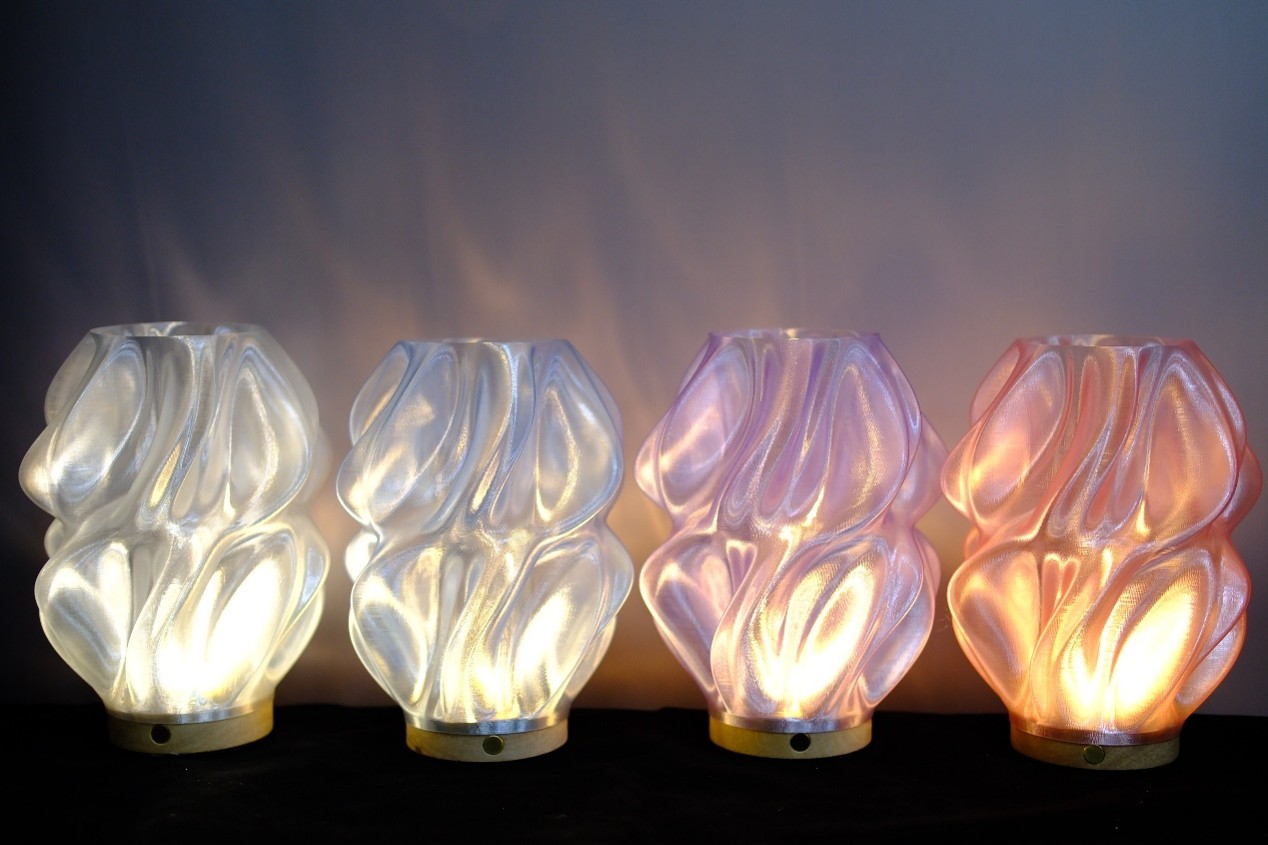
Home design is undergoing an interesting shift.
In the past, we bought vases to give flowers a suitable container; we bought table lamps to meet lighting needs; and we bought storage items to make spaces tidier. But today, more and more people are paying attention to another kind of value in household items: Can they express personal aesthetics? Can they interact with the living space? And can they keep adapting as lifestyles change?
3D printing is providing new answers to these questions.
With digital modeling and layer-by-layer forming technology, designers can incorporate complex curved surfaces, hollow structures, gradient textures, and modular components into everyday objects. A vase can become a sculptural artwork, a lamp can transform the atmosphere of an entire room through light and shadow, and a storage system can keep expanding like building blocks.
From functional products to life-oriented designs with emotional value, 3D printing is opening up more possibilities for household items. And the choice of material ultimately determines how these ideas will appear in our lives in terms of texture, color, and form.
1. A Vase Is More Than a Container: Let Form Become the Focus of the Space
Vases are a highly representative category when 3D printing is combined with home design.
The shapes of traditional vases are usually limited by factors such as molds, processing techniques, and production costs, whereas 3D printing can more flexibly realize spiral curved surfaces, wavy edges, asymmetrical contours, and complex hollow structures. Even without flowers, a vase with a distinctive form can become a visual focal point on a bookshelf, dining table, or entryway.
For example, a vase with a continuous twisting curve can convey a sense of flow; a hollow floral vessel formed with repeated geometric units can produce rich variations of light and shadow under illumination; and pieces with pronounced layered textures can enhance their sculptural quality through surface details.
The choice of material also changes the design language.
ANTINSKY PLA Matte is suitable for exploring soft, low-reflectivity visual effects. When a vase adopts a clean geometric silhouette or sculptural form, the matte surface can reduce strong reflections and allow more attention to focus on the relationship between contour and volume.
If you want the piece to have a more pronounced stone-like visual effect, PLA Marble is a option worth trying. It is suitable for decorative floral vessels, sculptural ornaments, and home pieces that imitate stone texture, creating an interesting combination of 3D-printed layered structures and a stone-like appearance.
For designs that favor bright colors and gradient visual effects, silk-textured or rainbow-gradient filaments can also offer different directions of expression. Through curved surface design and changes in light, the same floral vessel can present strikingly different visual results.
It should be noted that ordinary FDM printed parts are not inherently leak-proof. If a vase needs to hold water directly, sealing tests should be carried out based on the material, print structure, and post-processing method; a more reliable option is to use a separate glass inner liner, allowing the external printed part to focus on decoration and form.

2. From Lighting Tools to Emotional Design: 3D-Printed Ambient Lamps
If vases change the visual focus of a space, then lamps change its mood.
Soft warm light can make a bedroom more relaxing, fine hollow light-and-shadow patterns can add depth to walls, and sculptural lampshades can serve as home decor during the day while becoming the visual centerpiece of a space at night.
The advantage that 3D printing brings to lamp design lies in its ability to flexibly control the shape, texture, and light-transmitting structure of lampshades.
For example, designers can translate the vein patterns of natural leaves into repeated geometric textures, allowing light to pass through fine structures; they can also design spiral lampshades so that light changes continuously along the curved surface; and they can split a lamp into multiple replaceable components, allowing users to adjust the shape and color of the shade according to the style of the room.
Going a step further, lamps can also have a simple degree of interactivity.
Imagine a desktop ambient lamp made up of several rotating rings: turning the outer ring can change the opening of the shade and the projection effect; or design a bedside lamp with replaceable shells, switching between scenarios such as reading, resting, and gatherings by changing shades with different textures.
Such a product is no longer just a fixed lighting tool, but a life-oriented design in which users can participate and make adjustments.
In terms of material application, PLA is suitable for prototyping and appearance exploration of many decorative lampshades, PLA Matte can deliver a soft surface finish, and some translucent or natural-toned materials can be used to test the diffusion and transmission of light. PETG can also be used for some lampshades and structural components, but its specific suitability depends on the lamp design, heat source temperature, and material performance.
Lamp design must place safety before form. Ordinary PLA, PETG, and other 3D printing materials do not automatically possess high-temperature resistance or flame-retardant capability. Actual products should be validated according to light source wattage, heat dissipation space, and the material's heat resistance. Low-temperature LED light sources should be prioritized, and printed parts must not come into direct contact with high-temperature light sources or electrical components. Lamp structures and electrical components involving mains voltage should also comply with applicable safety requirements.

3. Making Household Items Interactive: Design Goes Beyond Appearance
In recent years, the appeal of household products has increasingly been reflected in the process of use itself.
A lampshade that changes light and shadow as it rotates, a set of decorative modules that can be freely assembled, a desktop ornament whose expression changes through a rotating mechanism, or even geometric decorations that can be rearranged according to mood—all of these can create a more direct connection between ordinary objects and users.
3D printing is especially suitable for exploring such ideas because it allows prototypes of different structures to be produced quickly, enabling designers to test movement patterns, connection relationships, and the actual hands-on experience.
For example:
Rotating light-and-shadow floral vessel: By the relative rotation of a double-layer hollow structure, the overlapping pattern changes and produces different visual effects.
Modular ambient lamp: By replacing lampshade modules, the overall form and light-and-shadow texture can be adjusted.
Magnetic desktop decoration: Allows multiple small geometric modules to be freely combined into different sculptural forms.
Expandable storage system: Uses a unified connection structure and adds new storage units according to changes in space and items.
These designs not only offer a new appearance, but also give household items a stronger sense of participation.
However, interactive structures need to take into account connection strength, clearance for movement, wear, and the risk of finger pinching at the design stage. If the product is intended for children or contains small magnetic parts, the corresponding safety risks also need to be evaluated separately.

5. Material Determines Texture: Making Creativity Truly Tangible
For 3D-printed home design, the model determines the form, while the material further determines the piece's appearance, tactile quality, and part of its functional performance.
The same shape, printed with different filaments, can produce completely different visual results. Therefore, before starting the design, clarifying the purpose of the piece and the style it is meant to convey is often more important than simply pursuing complex structures.
PLA Matte: a low-key, soft modern aesthetic
Suitable for exploring minimalist vases, sculptural ornaments, desktop storage, and decorative shells. Its low-reflectivity surface can highlight geometric contours and make the piece easier to integrate into modern, Nordic, or minimalist home spaces.
PLA Marble: a natural, calm stone-texture visual
Suitable for decorative floral vessels, stone-imitation ornaments, and sculptural works. It helps designers explore a stone-like visual language while retaining the advantages of 3D printing in complex shaping and rapid production.
PLA and other colored PLAs: rich color options and expressive forms
Suitable for making vivid desktop accessories, decorative modules, geometric lampshade prototypes, and creative small objects. Through color matching, multi-part printing, and structural assembly, a more personalized product style can be achieved.
PETG: a material option for certain functional structures
When a household product also needs a degree of toughness and durability, PETG can be evaluated. For example, some brackets, connectors, and storage components may be suitable, but the final performance still depends on the specific formulation, model design, print orientation, and usage environment.
TPU: exploring flexible and tactile design
For household components that need to bend, cushion, or provide a soft touch, TPU can offer design possibilities different from rigid materials, such as flexible anti-slip pads, certain protective covers, and elastic connectors. Specific applications need to be tested according to material hardness and mechanical requirements.
When selecting filaments, factors such as print difficulty, surface quality, mechanical performance, and final use should all be considered together, rather than judging only by color or appearance. For lamps, load-bearing structures, and products that come into long-term contact with heat sources, it is especially necessary to verify material performance under real-use conditions.
ANTINSKY continuously provides different types of 3D printing materials, offering creators more choices for exploring household items, decorative design, and functional structures.

6. From On-Demand Production to Long-Term Use: The Sustainable Value of 3D-Printed Home Goods
In addition to design freedom, 3D printing also offers new ideas for how household products are manufactured.
Traditional manufacturing usually requires preparing molds, inventory, and logistics arrangements according to production scale, whereas 3D printing allows some products to be made in small batches and on demand. For personalized decorations, custom storage pieces, and small replacement parts, this model helps reduce inventory buildup caused by inaccurate demand forecasting.
At the same time, digital models can be saved and modified. When a part is damaged or no longer fits, the designer can simply reprint only the required part instead of replacing the entire product.
This repairable and replaceable design philosophy is one of the values of 3D printing in sustainable home goods that deserves attention.
But sustainability is not automatically guaranteed by the printing technology itself. The electricity consumed during printing, failed prints, support material, filament sources, and the actual service life of the product all affect the final environmental impact. Plant-based raw materials such as PLA also do not mean that finished products can degrade quickly in natural environments.
Therefore, a more meaningful approach is to consider, from the design stage, reducing unnecessary material use, optimizing print success rates, extending product lifespan, and properly handling different types of printing waste according to local conditions.
A truly sustainable home design is not just about making a new object, but about making it more suitable for long-term use, repair, and continued reuse.
Making the Home a Place Where Creativity Keeps Happening
From a vase with sculptural presence, to a lamp that can transform the atmosphere of a space, to a storage system that can keep expanding, 3D printing is broadening the boundaries of home design.
It makes complex forms easier to realize, allows personalized products to be made in more flexible ways, and enables ordinary users to participate in the entire process from design to finished object.
And when we combine material, function, interactive experience, and long-term use, household items are no longer just objects that fulfill a single need—they can also become carriers for expressing personal style, improving life experience, and exploring creativity.
For ANTINSKY, materials are not only the foundation for bringing creativity to life, but also part of the design language. Through the texture, color, and performance of different filaments, creators can keep exploring new forms of home design.
Easy Print
May every print create more possibilities for everyday life.