English
Let creativity become a companion to growth: 3D printed educational toys and sustainable design | Ea
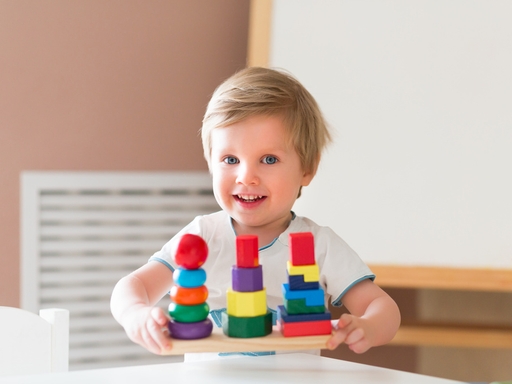
Toys are not just entertainment tools; they can also be a starting point for children to learn about the world, develop their thinking skills, and explore their creativity. From mechanical structures that require patient assembly to building blocks that can be freely combined, and from mazes and logic puzzles that test spatial imagination, each design can bring new possibilities to everyday play.
As 3D printing technology gradually enters homes, schools, and maker spaces, the way toys are designed and manufactured is also changing. In the past, toys often appeared on shelves in fixed forms and ways of playing; now, with the help of 3D printing, creators can design more personalized, adjustable, and sustainably iterative educational toys according to different age groups, interests, and learning needs.
The value of this technology lies not only in making toys more fun, but also in providing new ideas for more rational use of materials and product design.
I. From building to solving puzzles, let toys become tools for thinking training
The appeal of educational toys lies in their ability to transform abstract knowledge into hands-on experiences. 3D printing further expands the design possibilities for these toys.
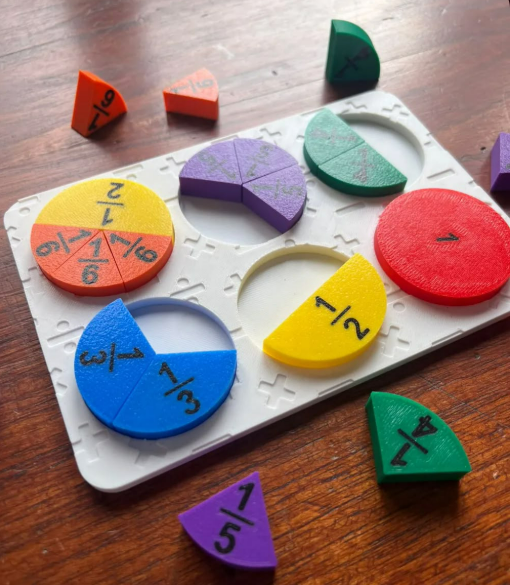
For example, using FDM printing to create geometric puzzles allows children to understand basic geometric relationships by rotating and combining parts of different shapes; designing multi-layered mazes or mechanical puzzle boxes can develop spatial imagination, logical reasoning, and problem-solving skills. For players who enjoy hands-on exploration, gear transmission models, detachable mechanical structures, and modular building blocks can also help them intuitively understand the relationship between mechanical movement and structure.
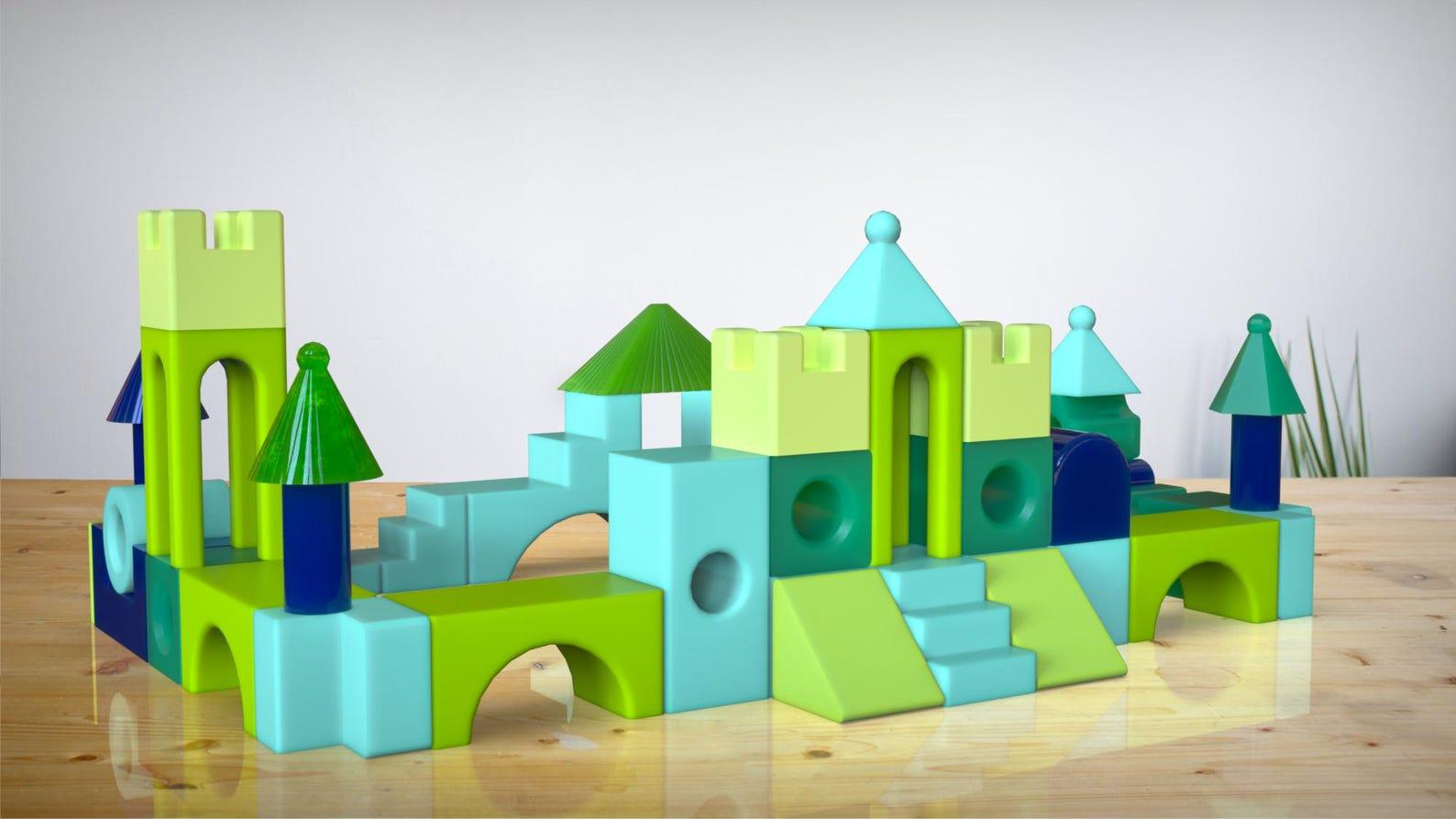
What's even more interesting is that 3D printing means toys don't have to be fixed the moment the design is completed.
When a puzzle piece is too simple, its shape and arrangement can be adjusted; when a mechanical structure malfunctions, the dimensions of the parts can be redesigned; and when a child has a new idea, new modules can be added to an existing toy. Toys are thus no longer just passively used finished products, but open-ended projects that can be continuously participated in, modified, and created.
This shift from user to creator is one of the reasons why 3D printing is so attractive in STEAM education, family maker activities, and creative learning.
II. Personalized design allows a set of toys to have more possibilities.
Traditional toys typically need to balance mass production, standardized specifications, and fixed ways of playing, while 3D printing is more suitable for design needs such as small batches, personalization, and rapid iteration.
This flexibility is especially important for educational toys.
A set of modular building blocks can have components added or removed according to different difficulty levels; the same puzzle toy can be transformed into different challenges by changing its internal structure; and even elements that children like, such as animals, vehicles, or buildings, can be incorporated into the puzzle to make the learning process more closely aligned with their personal interests.

Creators can also use parametric modeling to design versions of the same toy with different sizes, levels of difficulty, and connection methods. For schools, workshops, and maker communities, this means they can quickly create teaching aids suitable for different courses or activities around the same learning theme.
ANTINSKY's FDM printing supplies offer a range of material options for these kinds of creative projects. For example, PLA and PLA+ are suitable for many puzzles, building blocks, and desktop puzzle models that emphasize shape, structure, and appearance; PETG can be used for some toy structures that require both durability and functionality; and TPU is suitable for exploring designs such as flexible connectors and elastic components.
The specific materials should be selected based on the part's structure, frequency of use, printing parameters, and actual performance. For toys that require frequent disassembly and assembly, the dimensions, wall thickness, and fatigue resistance of the connecting parts are also important considerations during the design phase.
III. 3D Printing and Environmental Protection: Starting with Reducing Waste
When discussing 3D printed educational toys, environmental protection is a topic worthy of serious discussion.
Compared to traditional mass production, one advantage of 3D printing is its ability to create products based on actual needs. Creators can print a prototype first, confirming the size, structure, and playability, before deciding whether to proceed with production, without having to prepare a large number of finished products from the outset. This on-demand production method helps reduce unnecessary inventory and also minimizes waste caused by design adjustments.
Of course, on-demand production doesn't mean there's absolutely no waste. Printing failures, support structures, test prototypes, and poorly designed models still consume materials. Therefore, truly valuable environmentally friendly designs need to be considered from the modeling stage.
1. Print on demand to reduce unnecessary production.
Educational toys often contain a variety of parts of different sizes and structures. With the help of 3D printing, creators can make specific components according to actual needs, and replace any missing parts with the missing ones, instead of replacing the entire toy because a small part is damaged.
This approach is particularly flexible for teaching activities and small maker projects, and it also helps to control material consumption.
2. Modular structure allows toys to have a longer lifespan.
Environmental protection is not only related to the manufacturing process, but also closely related to how long a product can be used.
Designing toys as detachable and replaceable modules allows damaged gears, connectors, or bases to be replaced individually, rather than discarding the entire product. As playability evolves, new modules can be added, allowing the original toy to continue functioning.
For example, a maze toy set can retain a universal base and only replace the path components; a set of mechanical blocks can reuse connectors, printing only the necessary parts for new structures. Such designs not only increase the playability of the toys but also help reduce material waste caused by discarding the entire set.
3. Optimize the model to reduce support and failure printing.
Material consumption in FDM printing comes not only from the final product, but also from support structures, test pieces, and waste generated from printing failures.
By optimizing model orientation, reducing unnecessary overhangs, setting appropriate infill ratios, and verifying critical dimensions before final printing, the use of some auxiliary materials can be reduced. For educational toys, it's unnecessary to make all parts have complex structures just to pursue aesthetics: a reasonable structural design is often more effective than simply adding more material.
4. When selecting materials, pay attention to the entire usage cycle.
PLA is a material many 3D printing creators consider when making educational toys. It typically offers good printability, and common PLA sources involve plant-based resources. However, it's important to note that plant-based origin does not guarantee that the product will biodegrade in all environments.
The compostability of PLA depends on the specific formulation, certification standards, and processing conditions. Many products require industrial composting facilities to provide the appropriate temperature and processing environment and cannot be simply regarded as naturally degradable materials that can be discarded at will.
Similarly, materials such as PETG and TPU each have their own applicable scenarios, and their recycling methods depend on the local recycling system, material formulation, and pollution levels. Mixing different materials, coatings, and additional components can also increase the difficulty of recycling.
Therefore, when selecting materials, one should not only focus on the source of the raw materials, but also comprehensively consider the product's durability, actual service life, printing losses, and disposal methods after use.
IV. Integrating environmental protection concepts into every detail of toys
If you want 3D printed educational toys to be more in line with sustainable design principles, you can start with a few practical details.
First, make toys more durable. For parts that are frequently disassembled and repeatedly operated, the connection structure, wall thickness, and stress points should be thoroughly tested to avoid frequent reprinting due to weak design.
Secondly, make toys easier to repair. Use standardized connections and replaceable components as much as possible to reduce the chances that the entire product will become unusable if a small part is damaged.
Secondly, plan your printing tasks carefully. Arrange appropriately sized parts to minimize repetitive adjustments, and only begin mass production after confirming stable printing parameters. Test pieces and waste materials should also be sorted and disposed of according to material type and local recycling conditions; do not assume all printing waste can be directly recycled.
Finally, prioritize toy safety. Children's designs require assessment of the safety of small parts, sharp edges, pinchable structures, and materials based on age and usage scenario. Exercise particular caution with toys that may be put in the mouth; material names or successful printing alone do not prove that the finished product is suitable for direct use by children. For toys involving very young children, food contact, or other special usage scenarios, applicable safety standards and relevant tests should also be considered.

V. Make every print job a better design exercise.
3D printing brings more shapes and ways to play to educational toys, but also a new design approach: starting with an idea, through model verification, practical operation and repeated improvement, the idea can gradually become a usable product.
For creators, a successful educational toy doesn't necessarily require complex mechanisms or a large amount of materials. It can be a simple yet varied geometric puzzle, or a maze with increasing difficulty by changing modules. What truly matters is whether the toy can inspire interest in exploration and continue to create value through repeated use.
When we further consider material selection, on-demand production, module replacement, and lifespan, 3D printing also offers new possibilities for more responsible product design.
ANTINSKY continues to focus on the performance of 3D printing materials in creative design and practical applications. Whether it's PLA for geometric puzzles, PETG for functional structures, or TPU for flexible components, the right material can help creators better realize their design intentions.
Let toys embody imagination, and let design reduce unnecessary waste.
ANTINSKY|EasyPrint