English
ANTINSKY PLA-Luminous Rainbow Review | Making 3D Printed Creations “Glow” from Day to Night
What can a roll of color-changing, glowing PLA actually do?
For players who enjoy FDM 3D printing, ordinary single-color PLA is already enough to handle most printing tasks, but when we want the work itself to have stronger visual expressiveness, the material often becomes the key factor that determines the quality of the final result.
This time, we bring you ANTINSKY PLA-Luminous Rainbow.
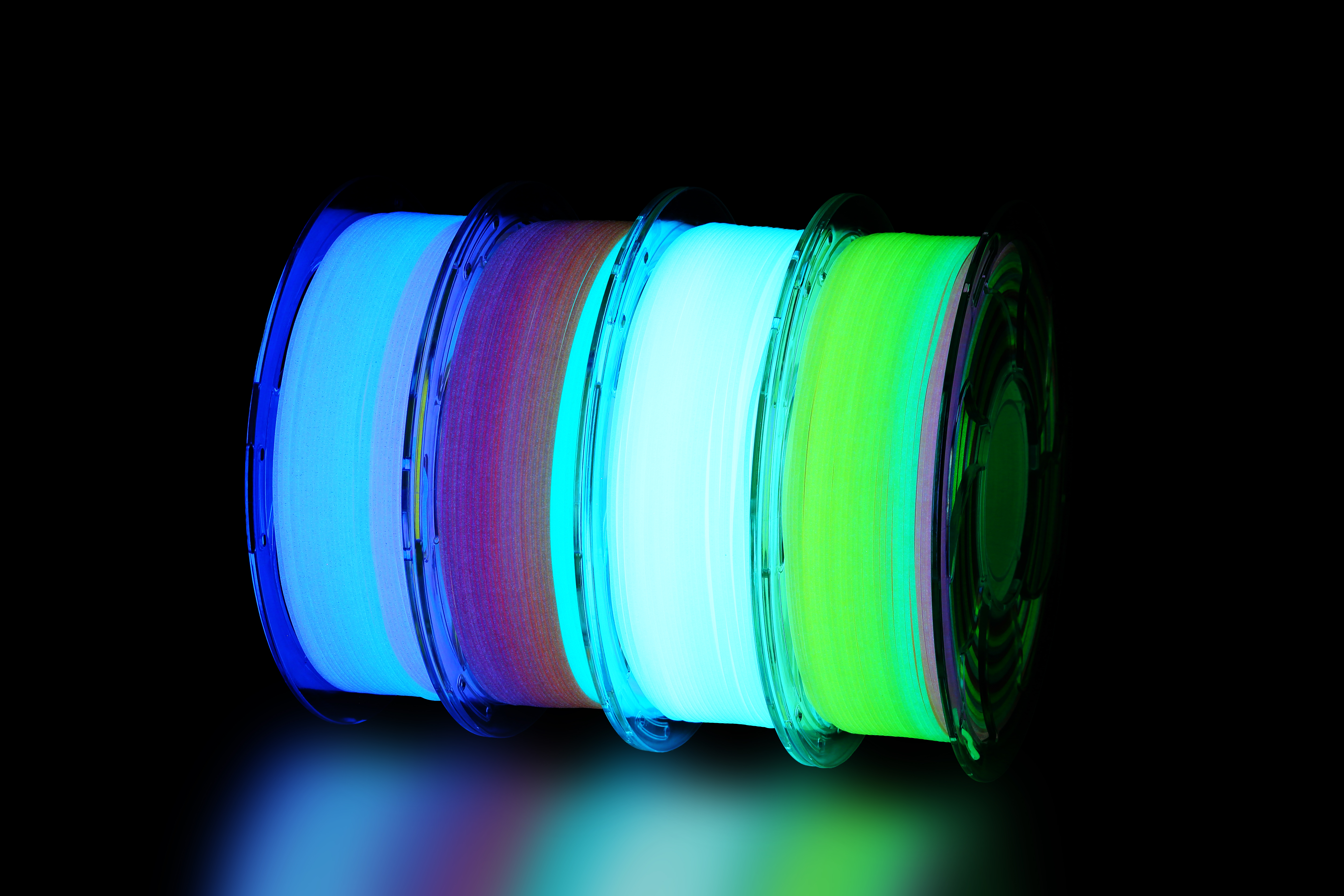
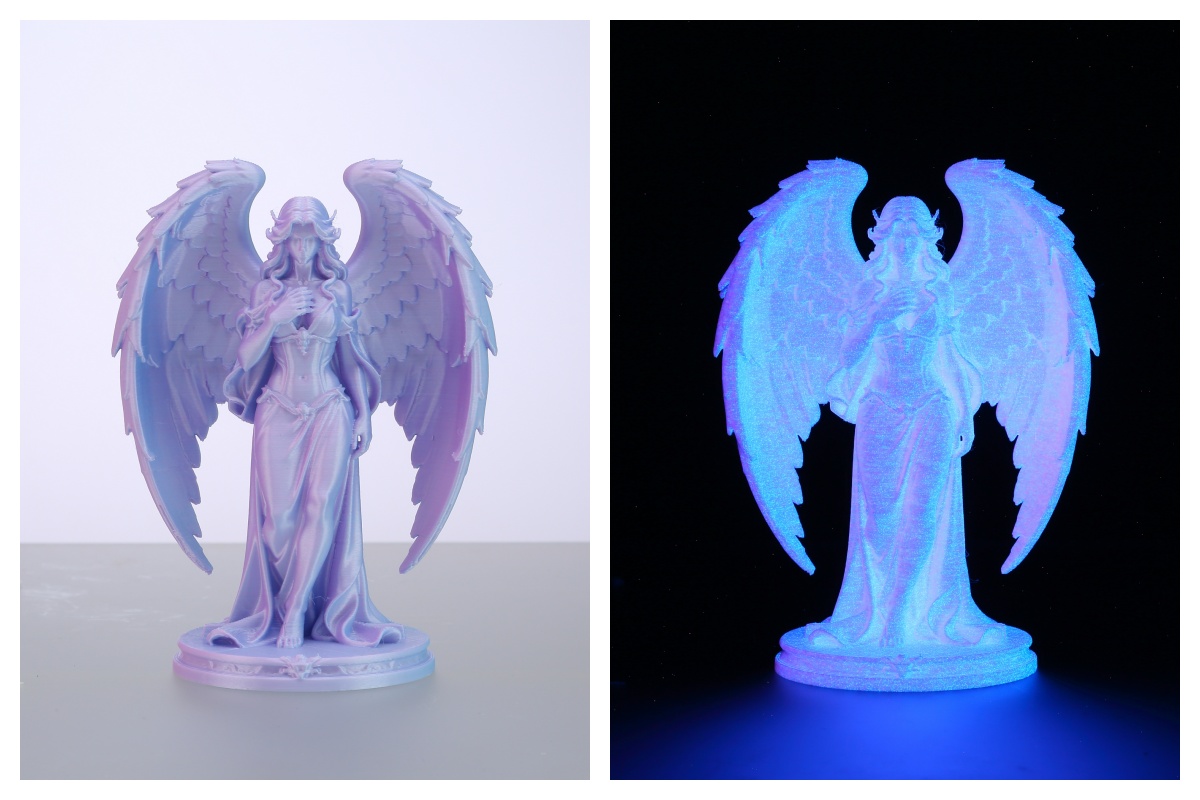
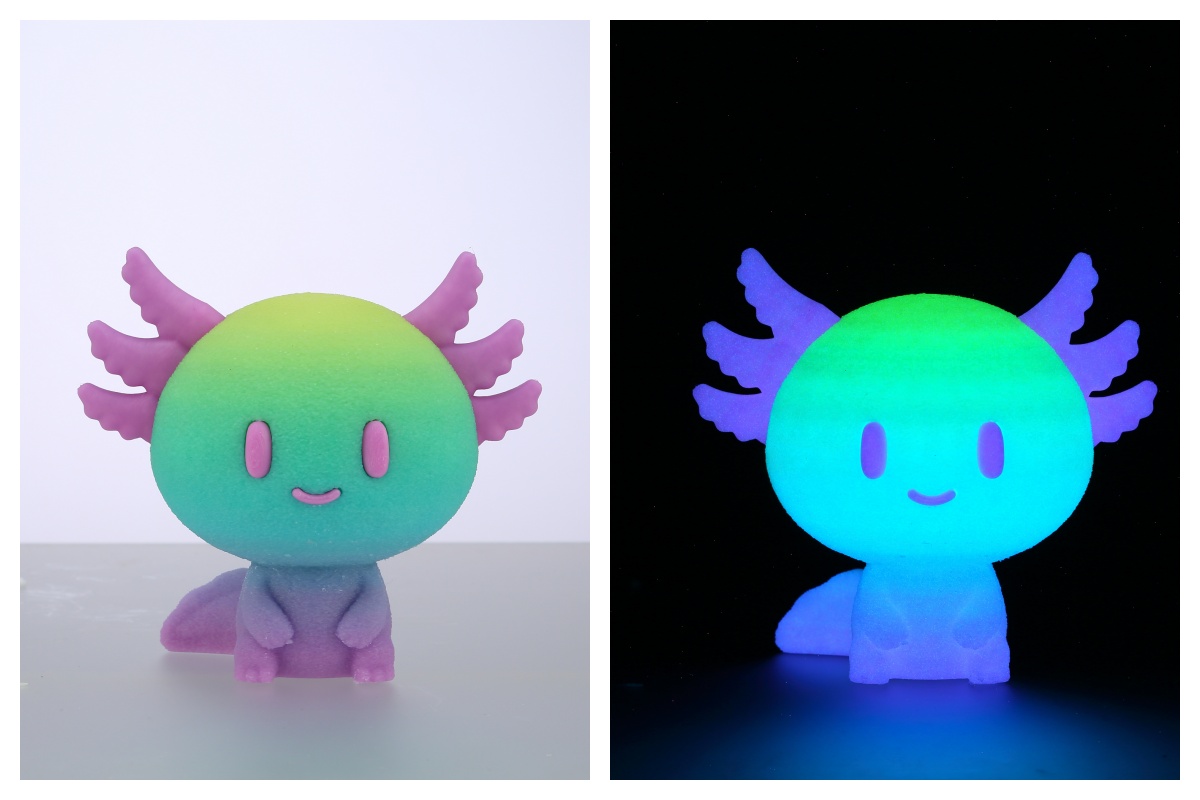
It combines rainbow gradient effects with nighttime glow performance, so the same model presents soft gradient colors under natural light, while in dark environments, it reveals another kind of atmospheric visual effect.
This time, we tested it directly through actual printing, from loading the filament, printing, final results, to nighttime glow performance, let's see together what this roll of PLA-Luminous Rainbow can actually deliver.
01|One roll of material, two visual experiences
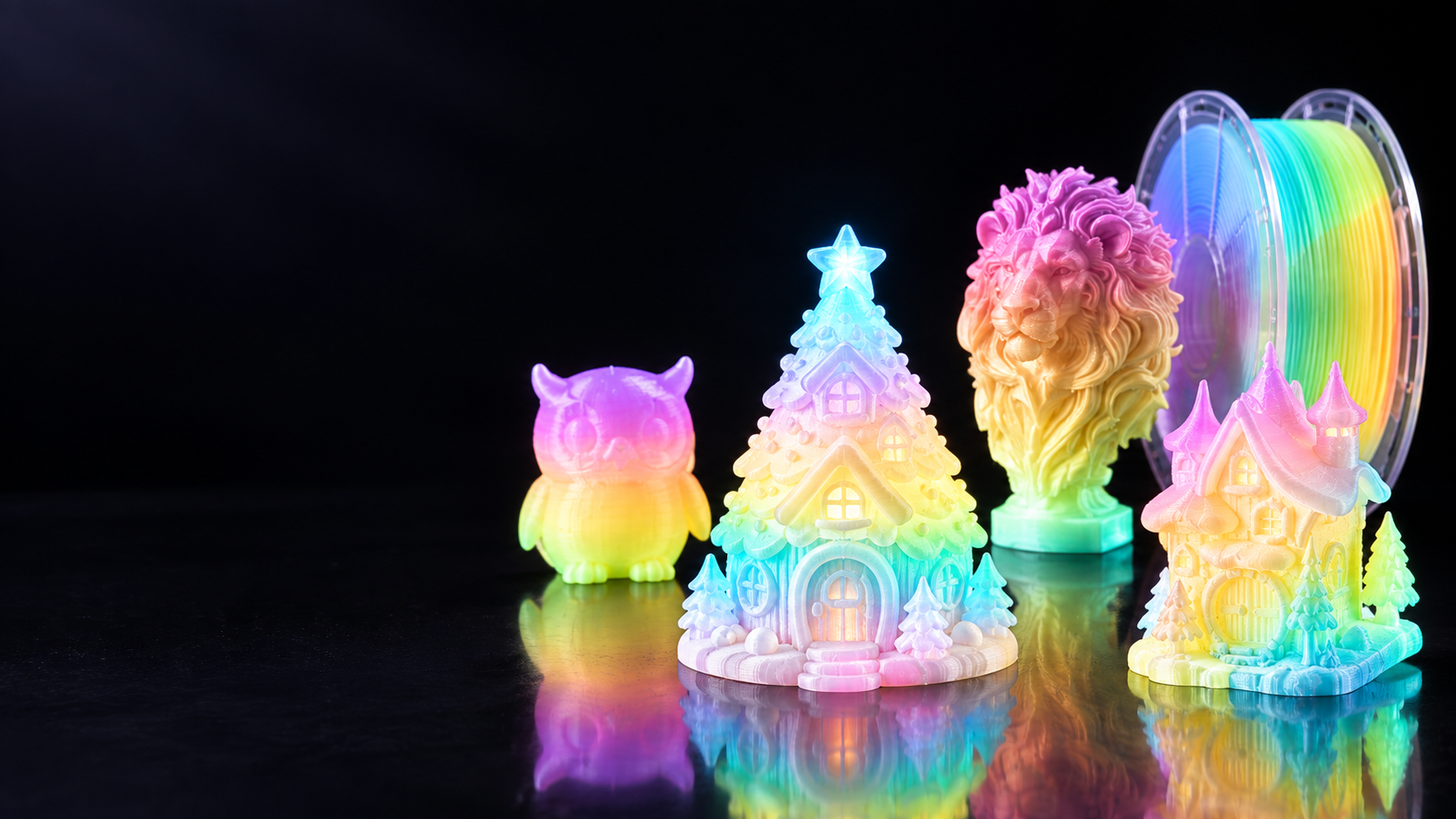
The biggest feature of PLA-Luminous Rainbow is that it is not simply a "colorful PLA." Under daylight or normal lighting conditions, the material itself shows an obvious multi-color gradient effect. As the model prints at different heights, the color gradually transitions among pink, purple, blue, green, yellow, and other colors.
This means:Without changing colors or post-printing painting, a model can naturally form rich color layers.For models such as treehouses, castles, animals, plants, fantasy ornaments, and similar pieces, this gradient effect is especially noticeable. And in dark environments, PLA-Luminous Rainbow presents a completely different effect. After exposure to light, the material can produce a soft glow in the dark, giving the originally static model a stronger nighttime atmosphere.Colorful gradient during the day, glowing ornament at night,this is also the most interesting part of PLA-Luminous Rainbow.
02|Actual printing: Is it difficult to get started?
For special-effect filaments, the question people care about most is usually not "does the color look good," but rather:Is it easy to print?
This time, we conducted actual printing tests separately and adapted the settings for different devices.
Test equipment covers:
Bambu Lab series
Snapmaker series
Conventional FDM 3D printers
From actual usage, the operating logic of PLA-Luminous Rainbow is basically the same as ordinary PLA. After loading the filament, set the basic parameters according to the device and nozzle specifications, and you can start printing.
It is recommended to start testing with the following parameter ranges:
Parameter | Recommended starting range |
Nozzle temperature | Approximately 190–230°C |
Bed temperature | Approximately 25–60°C |
Nozzle | 0.4 mm recommended |
Cooling | Recommended to enable |
Print speed | Adjust gradually based on the device and model |
Actual parameters need to be fine-tuned according to the printer model, nozzle, layer height, model structure, and ambient temperature.
03|Bambu Lab × Snapmaker|Multi-platform compatibility
One important reason PLA has always been one of the most commonly used materials in FDM 3D printing is its good device compatibility.
This time, we applied ANTINSKY PLA-Luminous Rainbow to:
️Bambu Lab
For Bambu Lab users, you can set parameters based on the basic logic of PLA-type materials.
Recommended for the first print:
Start at normal speed → observe the extrusion → then gradually increase the print speed.
Especially for gradient filament, it is not recommended to chase extreme speed from the very beginning.
Because print speed, layer height, and model height all affect the final color transition position and gradient effect.
️Snapmaker
According to Snapmaker's official documentation, its PLA series materials cover multiple FDM devices and offer different print speed and nozzle temperature ranges.
For PLA-Luminous Rainbow, it is also recommended to start with stable parameters and then optimize based on the print results.The goal of the first print is not to "max out the speed," but to print the model stably first.Once you find the temperature and speed suitable for your device, you can further improve efficiency.
04|Print effect test: How obvious can the gradient be?
This is also the most noteworthy part of PLA-Luminous Rainbow.
Ordinary colored PLA usually requires:
Different colors → different filament → color change → continue printing
Whereas gradient filament allows colors to transition naturally as the filament itself changes, so the same model can show:Purple → Pink → Yellow → Green → Blue, a continuous change like this.
This type of effect is especially suitable for:
✨Fantasy architecture
Models such as castles, treehouses, magical cottages, and fairy-tale buildings can make excellent use of color variation.
Animals and designer toys
Rounded animal models, chibi characters, and designer toy figurines can achieve a softer visual effect through gradient colors.
Decorative ornaments
Flowers, plants, holiday decorations, desktop ornaments, and more can reduce post-painting work by using gradient colors.
05|Nighttime test: After turning on the lights, the effect is completely different
If PLA-Luminous Rainbow during the day is "colorful," then at night is when it truly begins to show its other side.
After fully absorbing UV light in a lit environment, placing the model in a darker setting reveals a distinct glow effect on the model's surface.
Especially:Models such as treehouses, Christmas trees, stars, and those with lots of hollowed-out and detailed structures,allow light to create richer visual effects both inside and on the surface of the model.
From the actual captured results, the same model has completely different visual language in different environments:
☀️Daytime:
Rainbow gradient, soft, and lively.
Nighttime:
Glowing, dreamy, and full of atmosphere. This also gives an ordinary desktop model a stronger sense of "playability."
06|Not just "good-looking" | Material performance must also stand the test
For 3D printing filament, we have always believed:Color is the first visual attraction, but printing performance is the key factor that determines whether users will keep using it.Therefore, this test did not only focus on the final colors.
We also observed:
✅Extrusion stability
Observe whether the material melts and extrudes stably during printing.
✅Layer adhesion
Observe layer bonding performance through the model structure and details.
✅Detail reproduction
Focus on testing models with rich details such as treehouses, windows, eaves, and decorations.
✅Finished surface
Observe layer lines, surface flatness, and gradient effects under different printing parameters.
✅Glow performance
Compare under normal lighting and dark environments.
Of course, different printers, nozzle sizes, layer heights, and speeds will all affect the final result, so we recommend players treat these parameters as a starting point for tuning, rather than a fixed answer.
07|Why do we recommend testing with complex models?
If you only print a simple cube, it is actually hard to truly see how well a special-effect filament performs. So this time, we chose models such as treehouses, Christmas trees, and fantasy architecture that feature:
Complex curved surfaces + multi-layer structures + rich details + large-area gradients.
Because only on such models can you simultaneously observe:
Color variation
Detail performance
Layer line control
Extrusion stability
Model structure
Glow effect
The final result presented is also closer to the actual experience players have in real use.

08|From day to night, see 3D printing in a different way
One roll of filament shows rainbow-like color changes during the day; at night it reveals a unique glowing atmosphere. No complex post-processing, no multiple color changes—just choose a suitable model and leave the rest to the printer and the material.
ANTINSKY PLA-Luminous Rainbow
makes every print a little more colorful, a little more imaginative, and a little more surprising.